
How Many Porta Potties Does a Construction Site Need?
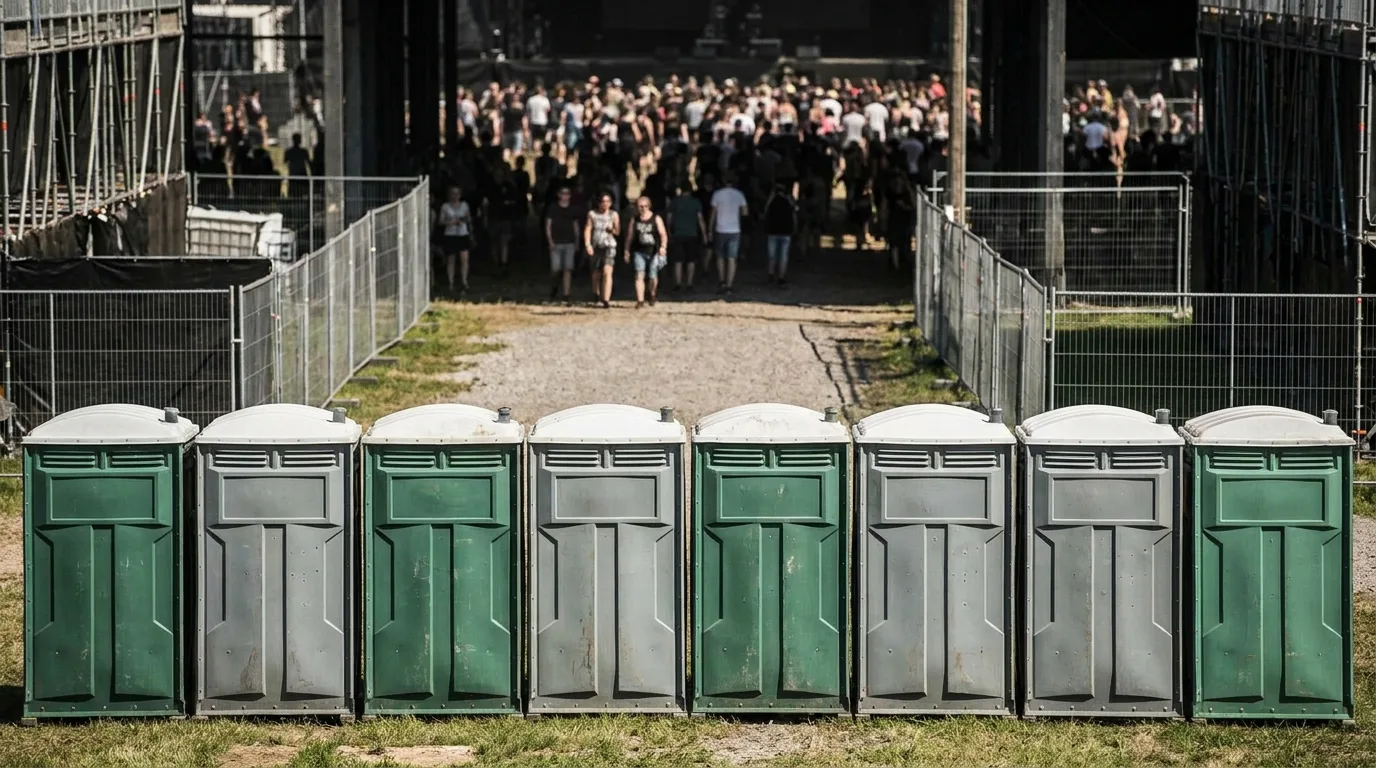
OSHA 1926.51(c) breaks it down by headcount, and Topeka contractors we work with usually plan straight off this table. Up to 20 workers needs 1 toilet facility. From 20 to 200 workers, add 1 toilet seat and 1 urinal per 40 workers. At 200 or more, the ratio drops to 1 seat and 1 urinal per 50 workers. A 15-person framing crew working a single-family lot in Topeka needs just 1 standard porta potty, while a 60-person commercial build crosses into the second bracket and needs 2 toilets with urinals. Multi-week jobs usually run better on a monthly porta potty rental than repeated day rentals. If the crew works with paints, coatings, herbicides or insecticides, OSHA 1926.51(f)(1) also requires washing facilities on top of the toilet count, which is where a handwashing station rental earns its keep. For full ratio guidance built for contractors, see OSHA portable toilet requirements or start with construction site services.
How Many Porta Potties Do I Need for an Event?
Events run on guest count and hours, not worker headcount, so the math looks different than a jobsite. A rough guide: 1 unit per 50 to 75 guests for events lasting up to 4 hours. Stretch the event past 4 hours, and you want closer to 1 unit per 40 to 50 people, since bathroom trips climb as the day wears on.
| Guests | Duration | Units Needed |
|---|---|---|
| 50 | 4 hours | 1-2 |
| 100 | 4 hours | 2-3 |
| 150 | 4 hours | 2-3 |
| 200 | 6 hours | 4-5 |
| 300 | 6 hours | 5-7 |
| 500 | 8 hours | 8-10 |
A wedding of 150 guests over 5 hours at a Topeka venue lands around 3 units, plus at least one ADA accessible porta potty per ADA Standards 213.2, which requires 5 percent of clustered units be accessible, and never fewer than one. Browse event restroom rental or wedding restroom rental options built around these headcounts.
Does Serving Alcohol Change the Count?
Yes. Alcohol increases bathroom trips, so bump your count up by roughly 20 to 30 percent over the dry-event number. A 200-guest outdoor reception in Topeka that would normally need 4 units under the standard table should run closer to 5, and adding a deluxe flushable porta potty or two keeps lines shorter near the bar. Festivals and concerts with beer gardens see the same spike; check festival restroom rental or concert restroom rental for setups built around that pattern. Multi-day festivals compound the issue, since waste accumulates and servicing intervals matter more. ANSI/PSAI Z4.3 sets a baseline service interval of once per week for up to 10 users over a 40-hour week, but a weekend festival with heavy alcohol use will need units serviced far more often than that baseline assumes, sometimes daily.
How Many Units for a Multi-Day Event?
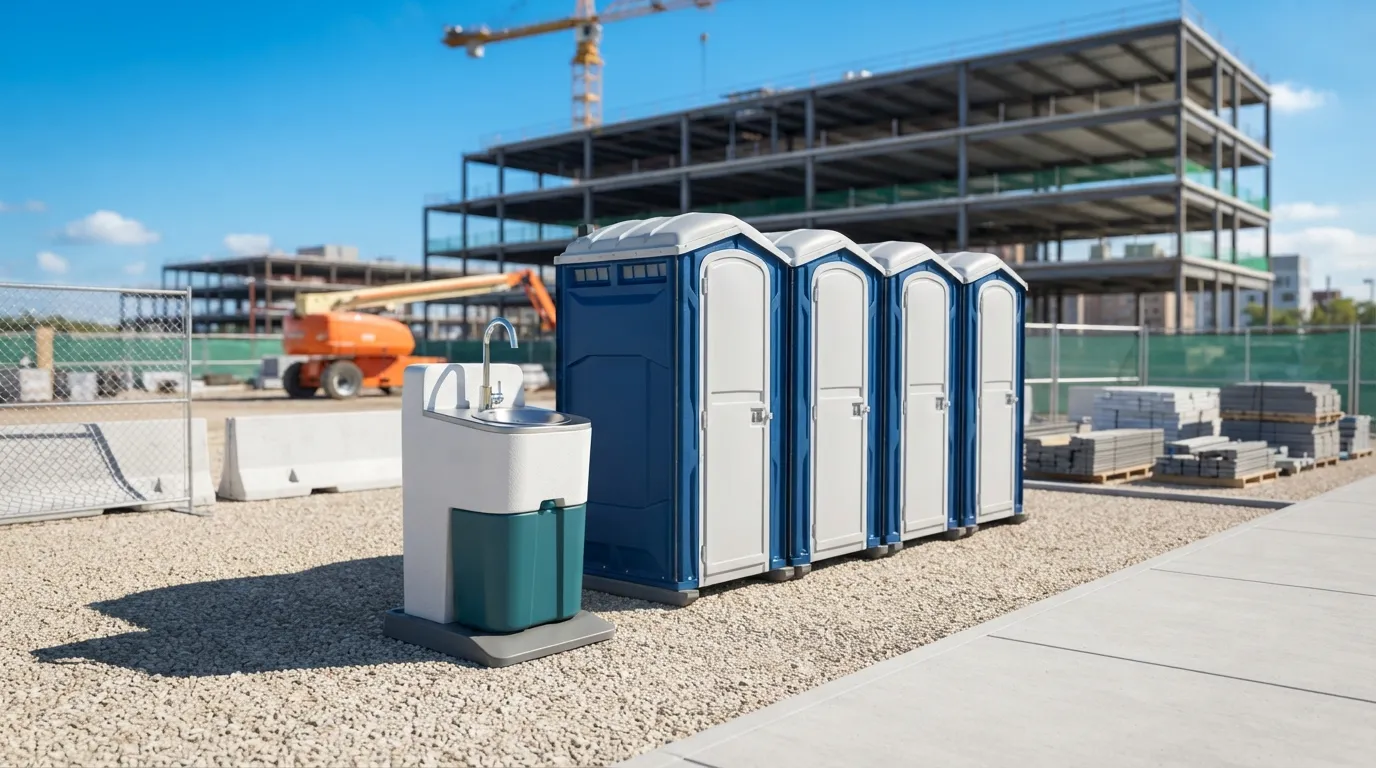
Multi-day events need either more units or more frequent servicing, not just more units sitting unused between shifts. A 3-day county fair in Topeka pulling 400 guests a day should plan on the high end of the standard table, then add a servicing visit each morning rather than relying on the once-a-week baseline in ANSI/PSAI Z4.3. Units with 60 to 70 gallon holding tanks fill faster with steady multi-day traffic, especially if food vendors are on site. For fairs and farm events, county fair restrooms and farm and agricultural restrooms both cover ratio planning specific to those crowds. Marathons and races spread people across a course rather than one lot, so placement matters as much as count; see marathon and race restrooms for that layout logic. A rental running the full weekend often prices out better than three separate day rentals, so ask about weekend rates when you call.
Worked Example: 20-Person Crew Building a Deck
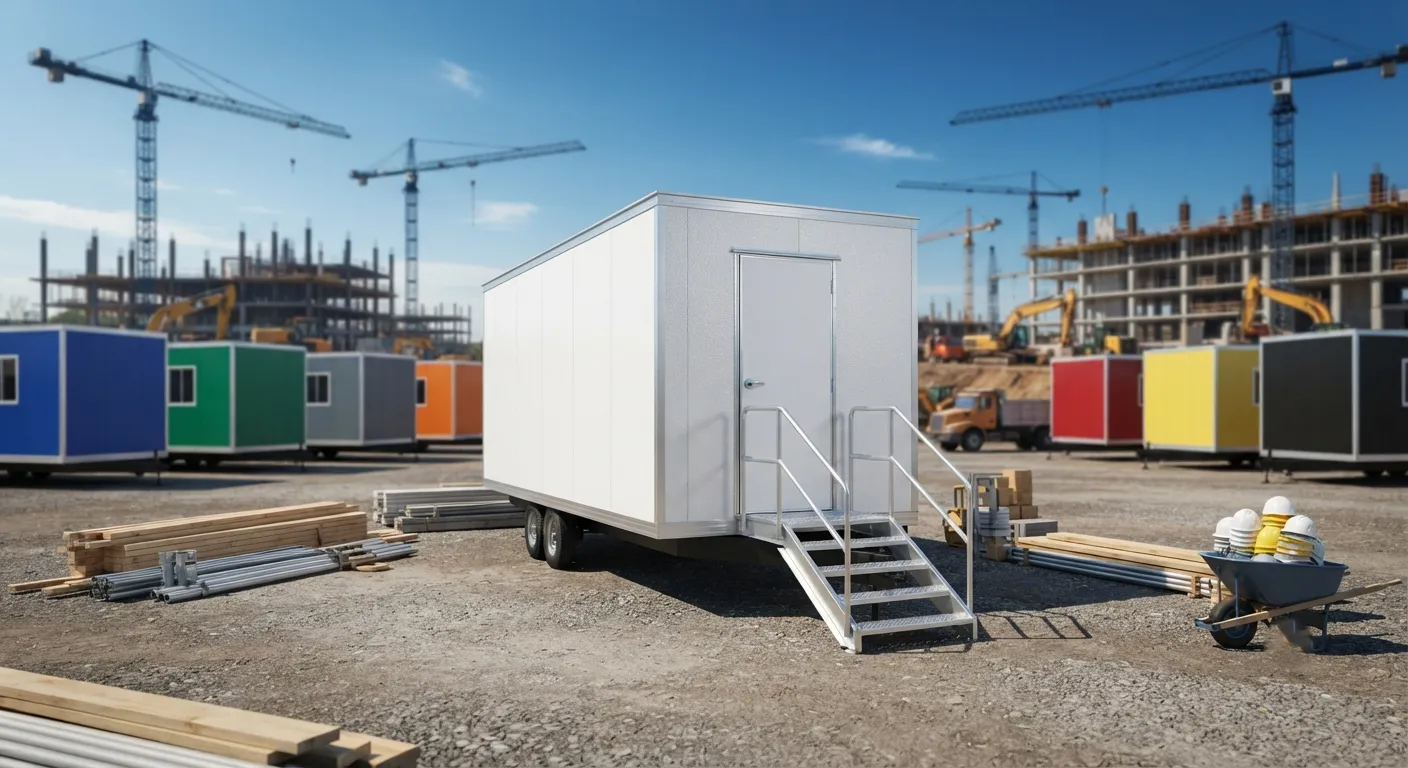
A 12-person crew framing a deck in Topeka falls well under the 20-worker threshold in OSHA 1926.51(c), so 1 standard unit covers the job. If the crew stretches past 6 weeks, a monthly porta potty rental usually beats paying day rates each week. Delivery needs enough clearance for the truck, similar to how a roll-off needs about 60 feet of straight clearance behind it, so confirm the driveway or street access before delivery day. A standard unit measures about 44 by 48 inches on the ground and stands roughly 92 inches tall, which fits most residential lots without crowding a driveway. If the job also involves debris removal, pairing the toilet with a 10 yard dumpster rental covers both needs in one delivery window. For homeowners managing a renovation directly, home renovation porta potty walks through the same math at smaller scale.
Worked Example: 300-Guest Wedding Reception
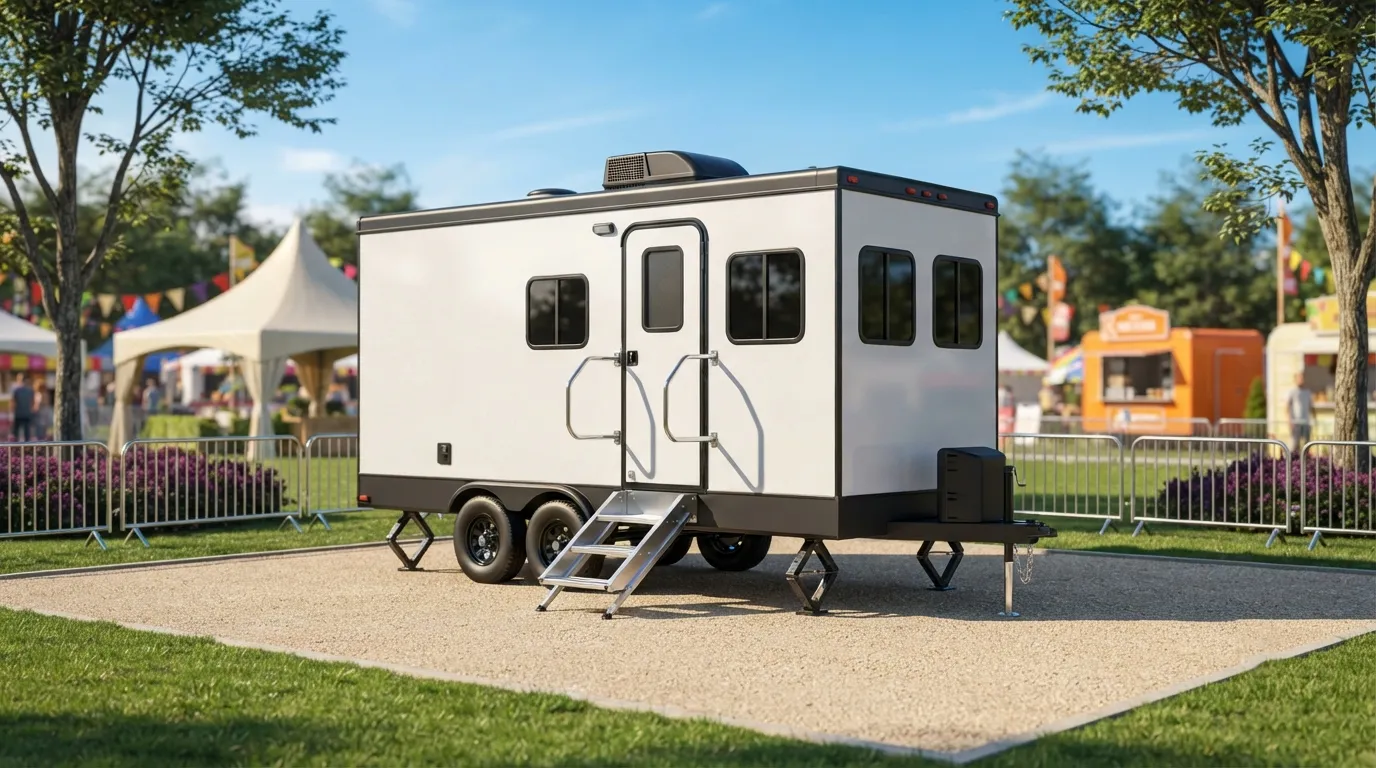
A 300-guest reception running 6 hours with an open bar in Topeka needs roughly 5 to 7 units under the standard event table, then a 20 to 30 percent bump for alcohol pushes that toward 7 to 9. At least one of those needs to meet ADA Standards 213.2's accessible-unit requirement, and a restroom trailer rental is worth pricing out at that guest count since a multi-stall trailer can replace several standalone units while giving guests a nicer setup. An 8 stall restroom trailer or 4 stall restroom trailer both work depending on layout and budget. Venues 7.7 miles east in Tecumseh or 12.4 miles northeast in Grantville fall inside typical Topeka delivery range, so distance rarely changes the math, only the delivery fee.
What If My Dumpster and Restroom Needs Overlap?
Most construction and renovation jobs need both a toilet and a dumpster on site, and sizing one wrong doesn't fix the other. A 10 yard dumpster runs about 12 feet long, and a 20 yard dumpster runs about 22 feet long, so know your yard or lot dimensions before ordering either. A 20 yard dumpster holds roughly 3 to 4 tons of debris, and a 30 yard dumpster holds roughly 4 to 5 tons, while a 40 yard dumpster can carry 5 to 7 tons depending on the material. In cubic feet, a 10 yard dumpster holds about 1,350 cubic feet, a 20 yard holds about 2,700 cubic feet, and a 40 yard holds around 5,400 cubic feet. A 40 yard dumpster holding 5,400 cubic feet answers how many cubic feet in a 40 yard dumpster, and knowing how many feet is a 10 yard dumpster, about 12 feet long, matters just as much as tonnage when you're checking clearance. Heavier debris like concrete or shingles hits the weight cap long before the box fills up, so check dumpster weight limits before loading. For sizing questions specific to your project, dumpster sizes and dimensions and roll-off dumpster rental cover the rest, and what cannot go in a dumpster is worth a read before demo day.
How many porta potties do I need for 100 people?
Plan on 2 to 3 standard units for 100 guests over a 4-hour event. Add a unit if alcohol is served, and confirm at least one meets ADA Standards 213.2 if guests include anyone needing accessible access. Longer events push the ratio higher since bathroom trips increase with time on site.
How many tons does a 30 yard dumpster hold?
A 30 yard dumpster typically holds 4 to 5 tons, though heavier material like concrete or dirt hits the weight limit well before the box is visually full. Check dumpster weight limits for your specific debris type before loading, since overage fees apply past the contracted weight.
How many tons does a 40 yard dumpster hold?
A 40 yard dumpster typically carries 5 to 7 tons depending on the material, with heavier loads like concrete or shingles reaching the weight cap before the box looks full. See 40 yard dumpster rental for placement and clearance notes.
How many tons does a 20 yard dumpster hold?
A 20 yard dumpster holds roughly 3 to 4 tons of debris, which covers most single-room renovation or roofing jobs. See 20 yard dumpster rental for sizing against your project.
How many cubic feet in a 10 yard dumpster?
A 10 yard dumpster holds about 1,350 cubic feet, and it runs about 12 feet long on most lots, which is worth checking against a driveway before delivery. See 10 yard dumpster rental for exact dimensions.
How many cubic feet is a 20 yard dumpster?
A 20 yard dumpster holds about 2,700 cubic feet of debris. It typically runs about 22 feet long, which is worth measuring against your driveway or lot before delivery. See 20 yard dumpster rental for dimensions and placement notes.
How many porta potties for a construction site with 50 workers?
Under OSHA 1926.51(c), 50 workers falls in the 20-to-200 bracket, requiring 1 toilet seat and 1 urinal per 40 workers, so 2 units covers the crew. Multi-week jobs often do better with a monthly porta potty rental than repeated day rates.
Do I need an ADA unit for a small backyard event?
If your event is private with no public accommodation obligation, ADA isn't legally required, but any guest using a wheelchair will need 32 inches of clear door width per ADA Standards 404.2.3. For public or ticketed events, ADA Standards 213.2 requires at least one accessible unit in any cluster.
How much does it cost to add units for a bigger crowd?
Standard units typically run $100 to $350 per day depending on duration and delivery distance; see porta potty rental cost for full pricing by rental length. Delivery fees and multi-unit discounts vary, so request a quote through Topeka Porta Pros once headcount is set.
Next step
Get a delivery date
Tell us the address, the dates and the headcount. We size the order and confirm the route.