
How many restrooms does a farm crew need?
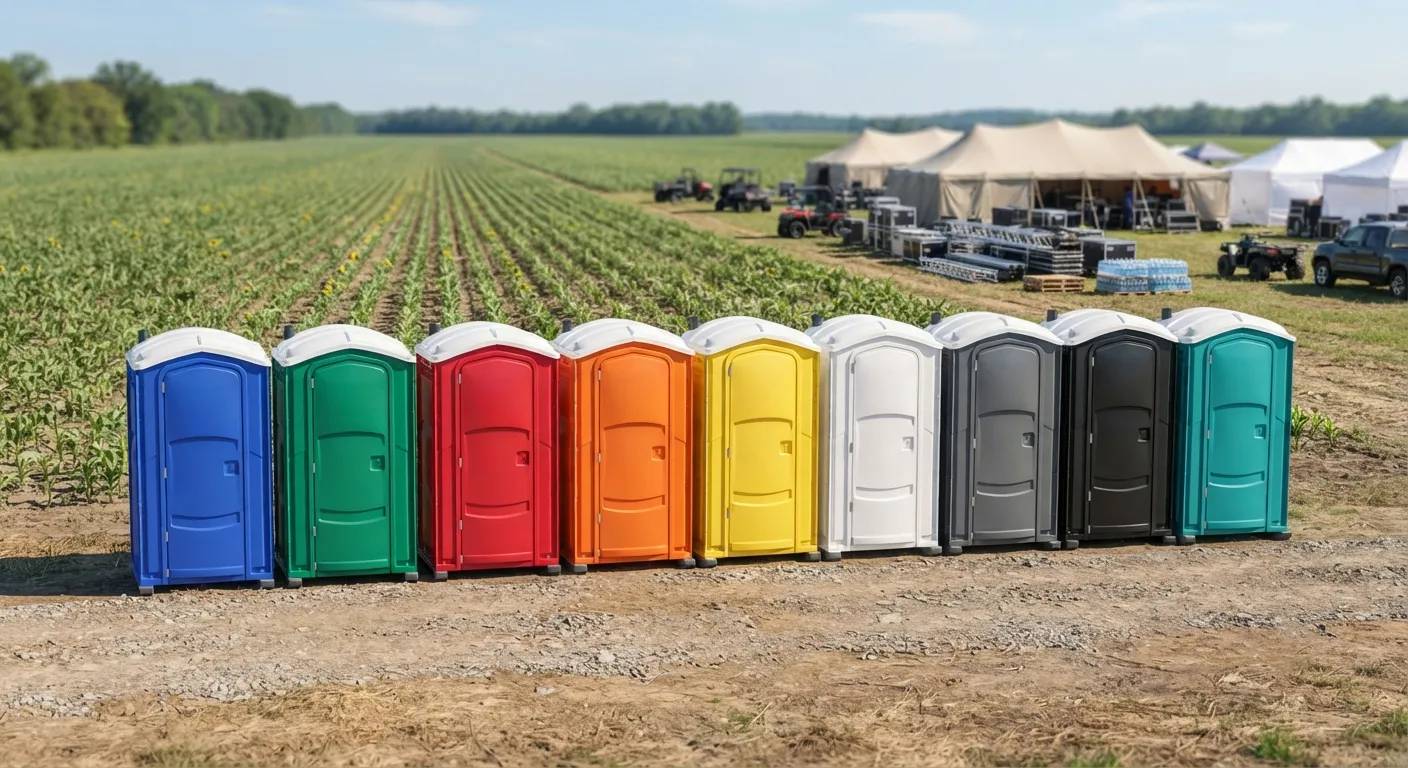
Start with OSHA 1928.110. It calls for one facility per 20 hand-labor employees, and it has to sit within a quarter mile walk or a five minute walk of where people are working. That is the federal floor for ag operations, not a suggestion. A 12 person harvest crew clears that bar with a single standard porta potty rental, but once you're running two crews across separate fields, you need units at each site, not one unit in the middle hoping everybody walks over.
Topeka farms spread out. A section of cropland can put workers a mile from the yard, so the quarter mile rule usually means more than one placement point, not more capacity at one spot. We plan around that when we quote portable toilet rental for row crop or livestock operations, and we walk the property first if access is tight. Combine and tractor traffic also matters. If a unit sits in a turn row, it needs to survive equipment passing within a few feet, so gravel pads or fence line placement beats open field mud. Our porta potty placement guide covers ground stability and wind exposure, both real issues on open Kansas farmland. For seasonal labor housing near Grantville, 12.4 miles northeast of Topeka, we've set multiple units per housing cluster rather than one unit for the whole crew.
What about water and handwashing on a farm site?
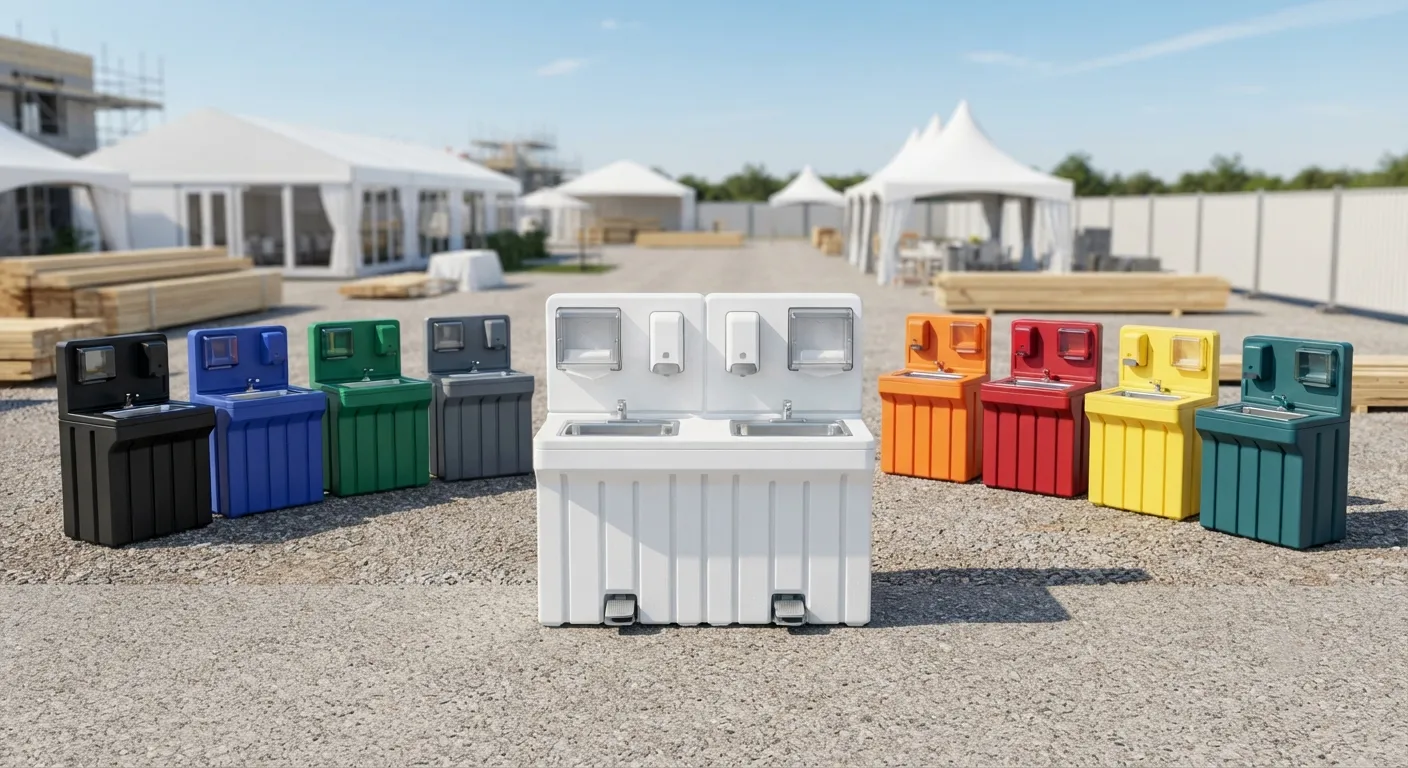
OSHA 1928.110 also requires potable water and handwashing at the same intervals as toilets, and hand sanitizer does not satisfy 29 CFR 1910.141(d)(2), which calls for soap and towels or a hand drying device. That rule matters more on farms than almost anywhere else, because dust, chemical residue and animal contact all end up on hands before lunch. A handwashing station rental paired with each restroom cluster keeps you compliant without extra trips back to the barn.
If your crew handles herbicides or insecticides, OSHA 1926.51(f)(1) requires washing facilities specifically for that exposure, separate from general sanitation. That is a narrow rule, but it applies directly to spray crews and anyone mixing chemical on site. We set up a portable sink rental right at the mixing station in those cases, not just near the restroom. For general potable water supply, OSHA 1926.51(a)(1) requires an adequate supply be available at all worksites, which on a farm often means a tank refill schedule tied to your pumping route. Ask about our hand sanitizer station rental as a supplement, never a replacement, for the soap and towel requirement.
Do farms and ranches need septic or holding tank service too?
Most do, especially bunkhouses, seasonal housing and processing buildings that run water fixtures year round. A typical residential-scale septic tank gets pumped every 3 to 5 years, depending on tank size and household count, and that timeline shifts fast when you add seasonal labor housing or a farm kitchen running full hours during harvest. Our septic pumping service handles that on a schedule, and how often to pump a septic tank walks through what drives the interval up or down.
If you run a farm stand, dairy operation or any food prep, grease and solids build up fast in an interceptor, and it needs pumping once fats, oils, grease and solids hit 25 percent of the liquid depth. Our grease trap pumping crew checks that on the same visit as septic work when a property has both. For sites without permanent plumbing at all, a holding tank rental covers wash water or gray water until you're ready to build out something permanent. We've served properties as far as Williamstown, 24.6 miles east of Topeka, on the same septic route, and Silver Lake, 14.3 miles northwest, gets covered too.
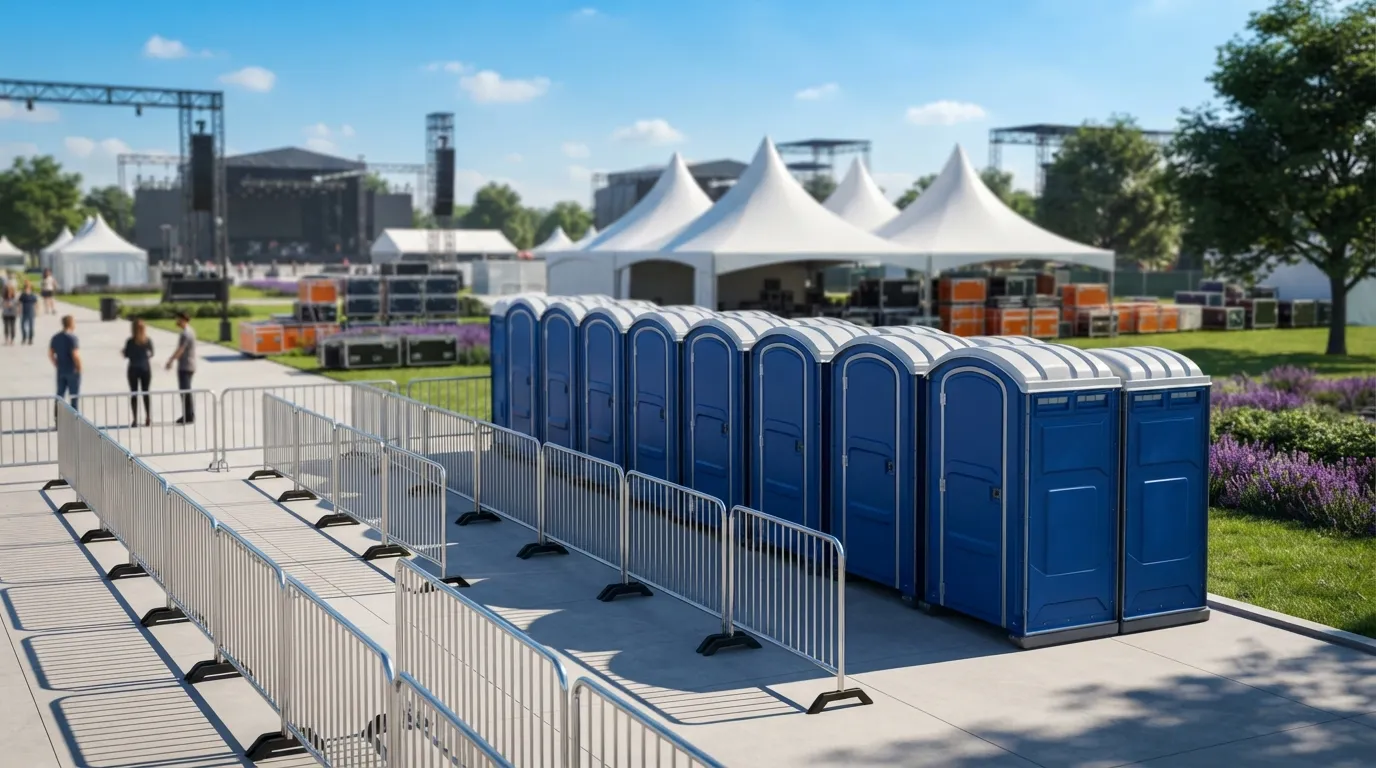
Beyond restrooms and tanks, a lot of farm operations end up needing more than one type of service at once. A roll-off dumpster rental clears out old equipment or fencing during a property cleanup, and temporary fence rental keeps livestock or visitors away from active work zones during events like a county fair restrooms setup on ag land. If you're staging a large harvest crew or seasonal event, check how many porta potties do i need before you call, it'll speed up the quote.
How much does a farm restroom rental cost in Topeka?
A standard unit runs about $150 to $200 a week in the typical range, cheaper by the month for season-long placement. Multi-unit farm accounts often land closer to the monthly porta potty rental rate. See porta potty rental cost for the full breakdown by duration.
Can you deliver to a field with no paved access?
Yes, but tell us about ground conditions first. Soft dirt, deep ruts or standing water changes where we can safely place a unit. We'll walk the site or ask for photos before confirming delivery near Tecumseh, Wakarusa or anywhere off the main road.
Do farm restrooms need to be ADA accessible?
It depends on who's using the site. Seasonal labor crews fall under OSHA 1928.110, not ADA. But if the public visits, like a farm stand or agritourism event, ADA Standards 213.2 requires at least one accessible unit when several are clustered. Ask about our ada accessible porta potty options.
How often do you service units during harvest season?
Weekly is the standard interval under ANSI/PSAI Z4.3 for up to 10 users over a 40 hour week, but harvest crews often run longer hours and more people, so we adjust the schedule. Call and we'll set a route that matches your actual crew size.
Can one holding tank cover a whole bunkhouse?
Sometimes, depending on fixture count and how many people are staying there. A single 1,000 gallon-class tank works for smaller housing, but larger crews need either a bigger tank or a shorter pump-out interval. We size it during the site visit, then set the emergency septic service contact on file just in case.
Next step
Get a delivery date
Tell us the address, the dates and the headcount. We size the order and confirm the route.