
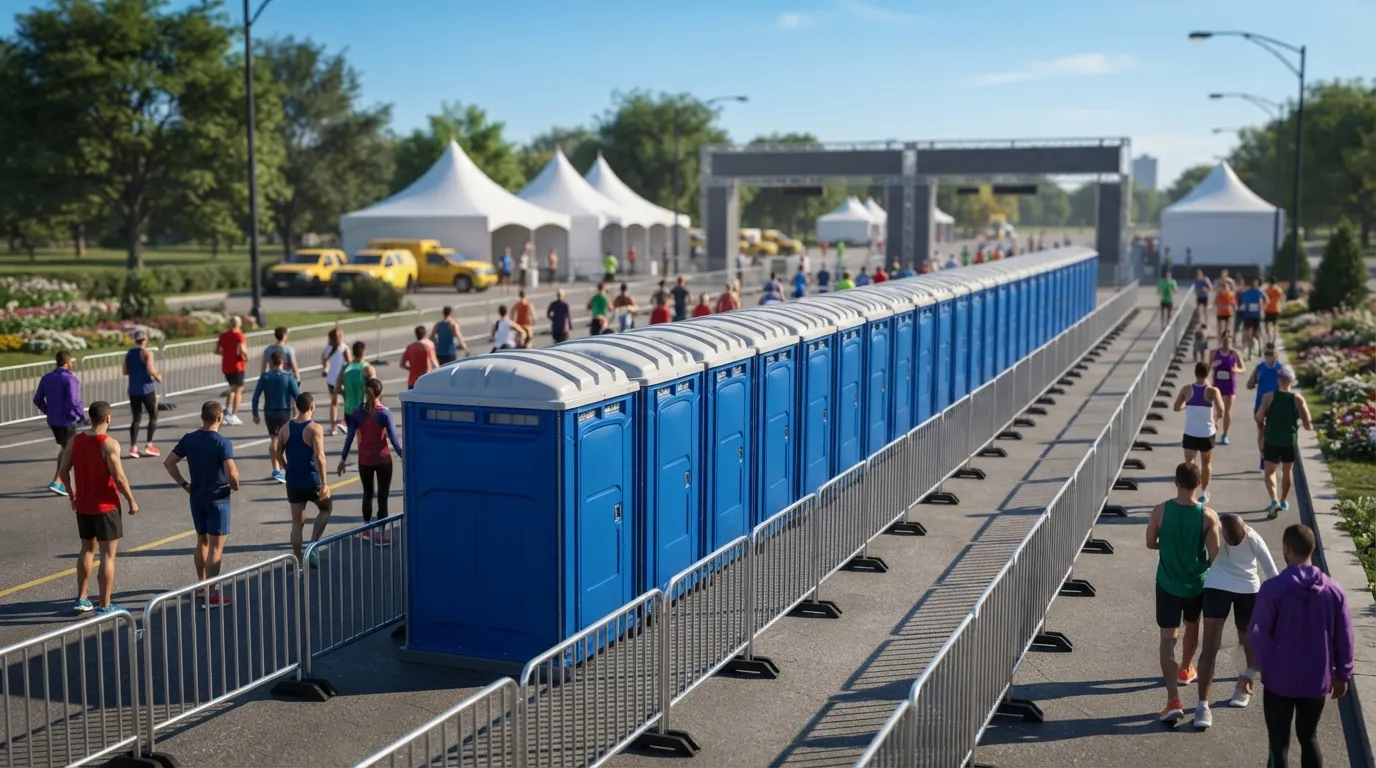
How many restrooms does a race need?
Start with your runner count, then add spectators. Standard portable toilets hold a 60 to 70 gallon tank and stand about 92 inches tall, which handles a steady stream of quick visits without a mid-race pump-out. For a course through Topeka with 500 registered runners, plan clusters at the start line, at least one mid-course aid station, and a bank near the finish where finishers linger. OSHA 1926.51(c) sets ratios for job sites, not races, but it's still a useful gut check: 1 toilet per 20 people is the baseline most race directors work backward from before adjusting for spectator density. Add ADA accessible units to every cluster. ADA Standards section 213.2 requires that at least 5 percent of clustered single-user units be accessible, with a minimum of one no matter how small the cluster. Each accessible unit needs a 60 inch turning circle per ADA Standards section 304.3.1 and a door opening at least 32 inches wide under section 404.2.3, so give the accessible unit its own flat pad, not a leftover corner. If your race also needs handwashing at fuel stations, a handwashing station rental or a simple portable sink rental covers volunteers handling food and gels. For big-field events pushing past a few thousand runners, see how many porta potties you need before you finalize your course map, and check OSHA portable toilet requirements if any part of the course crosses an active job site.
Where should units go on a race course?
Placement matters more than count. Put clusters at the start corral, at least one aid station per 3 to 5 miles, and a heavier bank at the finish, since finishers stall out longer than runners passing through. Ground needs to be level and firm; ADA Standards section 302.1 calls for stable, slip-resistant surfaces, which rules out soft turf or gravel shoulders for your accessible units. Keep a 36 inch clear path to every unit per ADA Standards section 403.5.1, especially where cabling or barricades might narrow the route. If your event runs through a start or finish festival area with vendor tents and generators, you'll likely also need temporary fencing or a chain link temporary fence to route foot traffic and keep the restroom queue from spilling into the course lane. OSHA 1926.202 requires barricades used for crowd control to meet ANSI D6.1, worth mentioning to your barricade vendor even outside a construction context. Races running early morning or into dusk often add a light tower rental at the start corral for pre-dawn check-in, and if you're running timing equipment or a PA system off a generator, know how to brace a temporary power pole so a gust or a tripped cable doesn't take down your finish-line clock mid-race; stake guy lines at three points and keep the base clear of runner traffic. A temporary power pole rental handles that load without running extension cords across the course, and pairing it with a handwashing station requirements checklist keeps your medical tent compliant too.
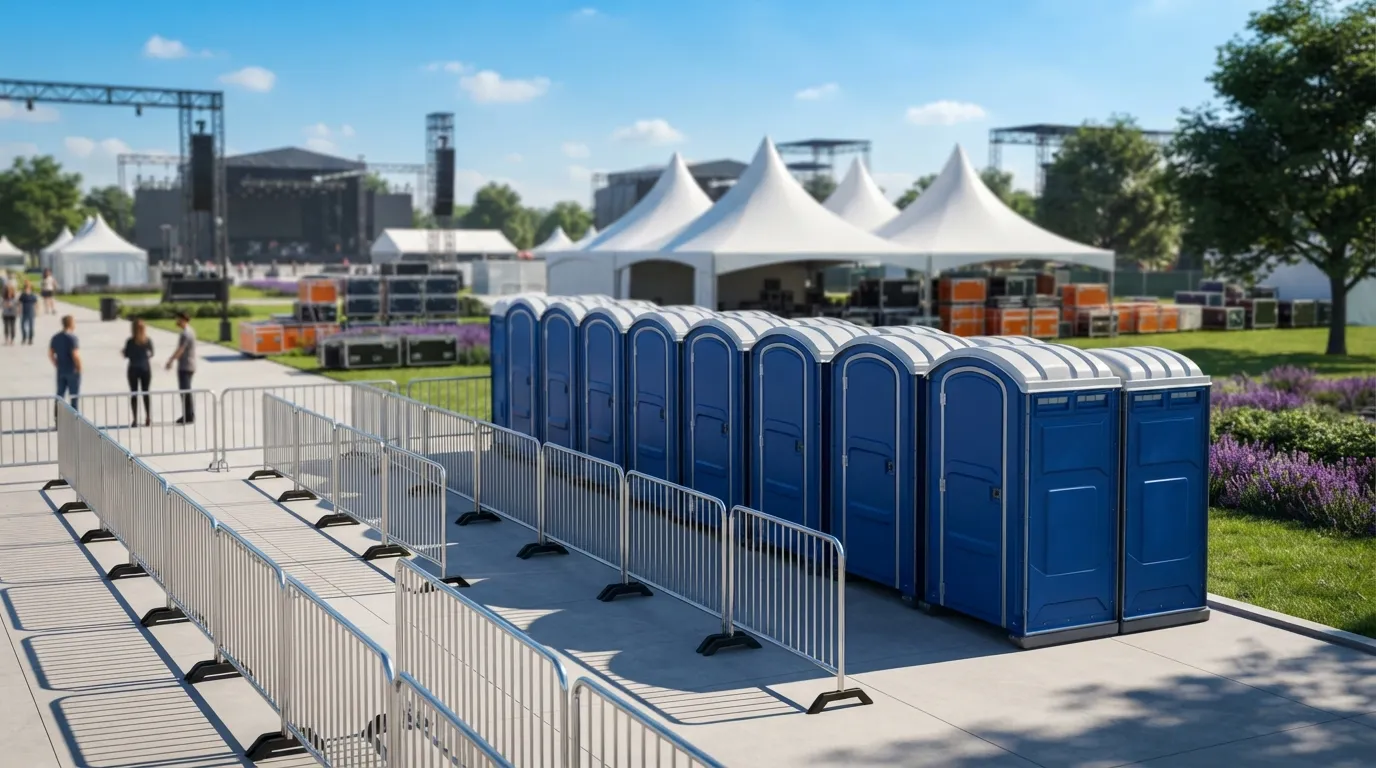
Should we rent by the day or the weekend?
Most single-day races rent by the day. A standard unit runs $100 to $350 a day depending on cluster size and how far the site sits from town; a multi-day weekend event, like a Friday packet pickup through a Sunday race, runs $125 to $400 for the weekend rate instead of stacking daily charges.
| Rental length | Standard unit | ADA unit |
|---|---|---|
| Day | $100 - $350 | $200 - $400 |
| Weekend | $125 - $400 | $199 - $300 |
| Week | $130 - $500 | $120 - $240 |
Delivery adds $100 to $500 depending on distance and access, so review the monthly porta potty rental page too if your race series runs the same course all season. If your course runs out toward Tecumseh, 7.7 miles east of Topeka, or loops near Wakarusa, 12.0 miles south, tell us the farthest aid station so we can quote delivery accurately. For races that stretch toward Grantville, 12.4 miles northeast, or Silver Lake, 14.3 miles northwest, we still run the same day-of servicing schedule, no separate trip charge buried in the quote. Check current numbers on the porta potty rental cost page or the per-day rate breakdown before you lock a budget, and see porta john rental if your race organizer uses that term in the RFP. If your race needs an upgraded unit near a VIP or sponsor tent, look at the deluxe flushable option instead of standard units, or a restroom trailer rental for a sponsor hospitality area.
How far in advance should we book race restrooms?
Book as soon as your course map and runner count are set, ideally 4 to 6 weeks out for anything over a few hundred runners. Race weekends compete with weddings and festivals for the same trailers and ADA units, so early booking locks your count. Use request a quote once you know cluster locations, or browse portable restroom rental options while you finalize the course map.
Do we need handwashing stations separate from restrooms?
Yes, if volunteers or aid stations are handling food, gels, or medical supplies. 29 CFR 1910.141(d)(2) requires soap and towels or a hand-drying device at washing facilities; hand sanitizer alone doesn't satisfy that standard for staffed stations.
Can portable restrooms be moved mid-race for a rolling course?
Units are set before the race and stay put; road races don't relocate restrooms mid-event. Instead we cluster extra units at aid stations and the finish so coverage matches where runners actually stop.
What size crew handles servicing during a multi-hour race?
Depends on cluster count and course length. A typical half marathon with 6 to 8 clusters needs one servicing truck circulating the loop; a full marathon with a longer course usually needs two, similar to staffing for a golf tournament restrooms layout or a county fair restrooms footprint.
Do we need fencing around the restroom clusters?
Not always, but at busy finish-line festivals it helps route queue lines away from the course lane. Pair it with crowd control barrier rental if you're expecting dense finish-line crowds in Topeka, and check the temporary fence cost page while you budget the finish-line layout.
Next step
Get a delivery date
Tell us the address, the dates and the headcount. We size the order and confirm the route.