
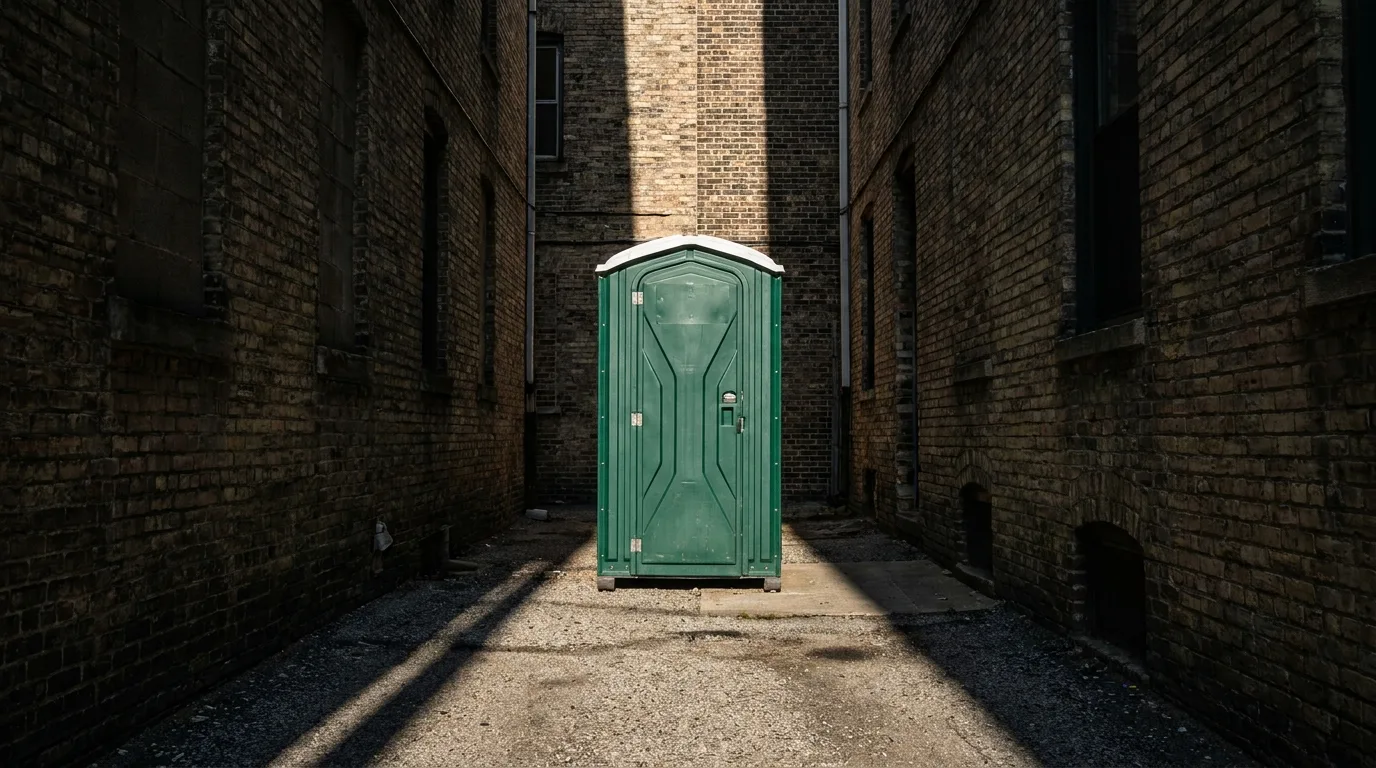
How Do Porta Potties Work?
The unit is simple by design. A construction worker steps up into a molded plastic booth about 44 by 48 inches on the ground, standing roughly 92 inches tall, and finds a seat over a holding tank. There's no flush, no water line, no drain. Waste drops straight into the tank below, where a blue chemical treatment works to break down solids and hold down smell between services. That's the whole system. ANSI/PSAI Z4.3, the portable sanitation service standard, sets a baseline interval of one service visit per week for up to 10 users over a 40 hour work week, which is why a busy Topeka job site needs more frequent pumping or more units, not just a bigger tank. If you're trying to figure out how many you actually need for a crew, our porta potty rental checklist and the how many porta potties do I need guide both walk through the math. For daily rate comparisons, see porta potty rental per day.
How Does a Portable Sink Work?
A portable handwashing station runs on a self-contained fresh water tank feeding a foot pump or hand crank at the faucet, with a separate gray water tank underneath to catch the runoff. No hookup to a building, no hose to a hydrant. OSHA 1926.51(a)(1) requires an adequate supply of potable water at all places of employment, and 29 CFR 1910.141(d)(2) is specific that washing facilities need actual soap and towels or a hand-drying device. Hand sanitizer alone does not satisfy that rule, which trips up a lot of site managers. If a crew is applying paints, coatings, herbicides or insecticides, OSHA 1926.51(f)(1) kicks in separately and requires washing facilities for that contaminant exposure. See our handwashing station rental page or portable sink rental for unit options, and check handwashing requirements if you're trying to match a permit condition.
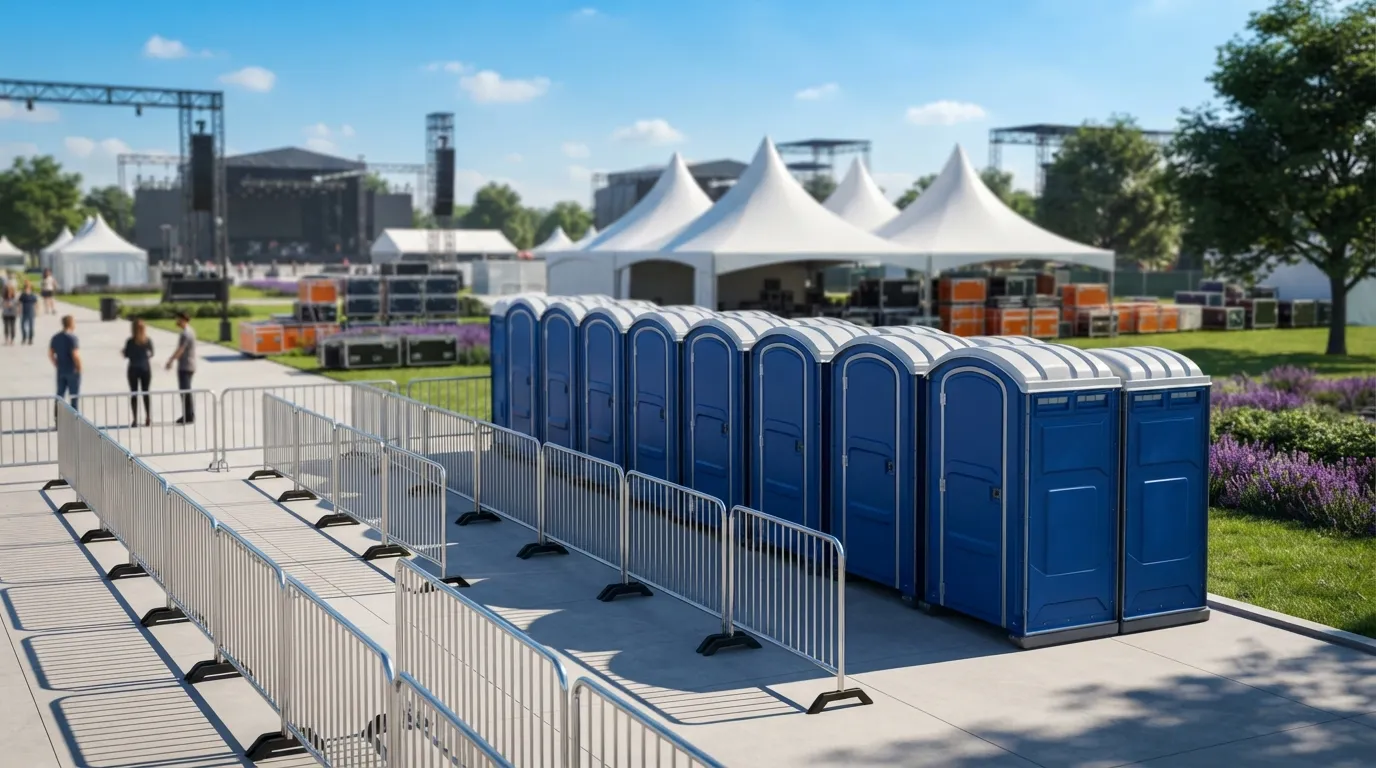
How Do Flushable Porta Potties Work?
A deluxe flushable unit uses a small onboard fresh water reservoir and a foot pump or pedal that pushes a rinse of water down the bowl after each use, into a separate holding tank rather than dropping waste directly below the seat. It feels closer to a real bathroom. These units also tend to include a hand sanitizer dispenser and sometimes a small sink, which is why they run higher than a standard unit, a deluxe rental typically lands in the 150 to 290 dollar range for a week. They're common at weddings and corporate events around Topeka where guests expect something nicer than a basic unit. Our deluxe flushable porta potty page covers the full spec, and wedding restroom rental and event restroom rental both cover use cases where flushable units make sense over standard ones.
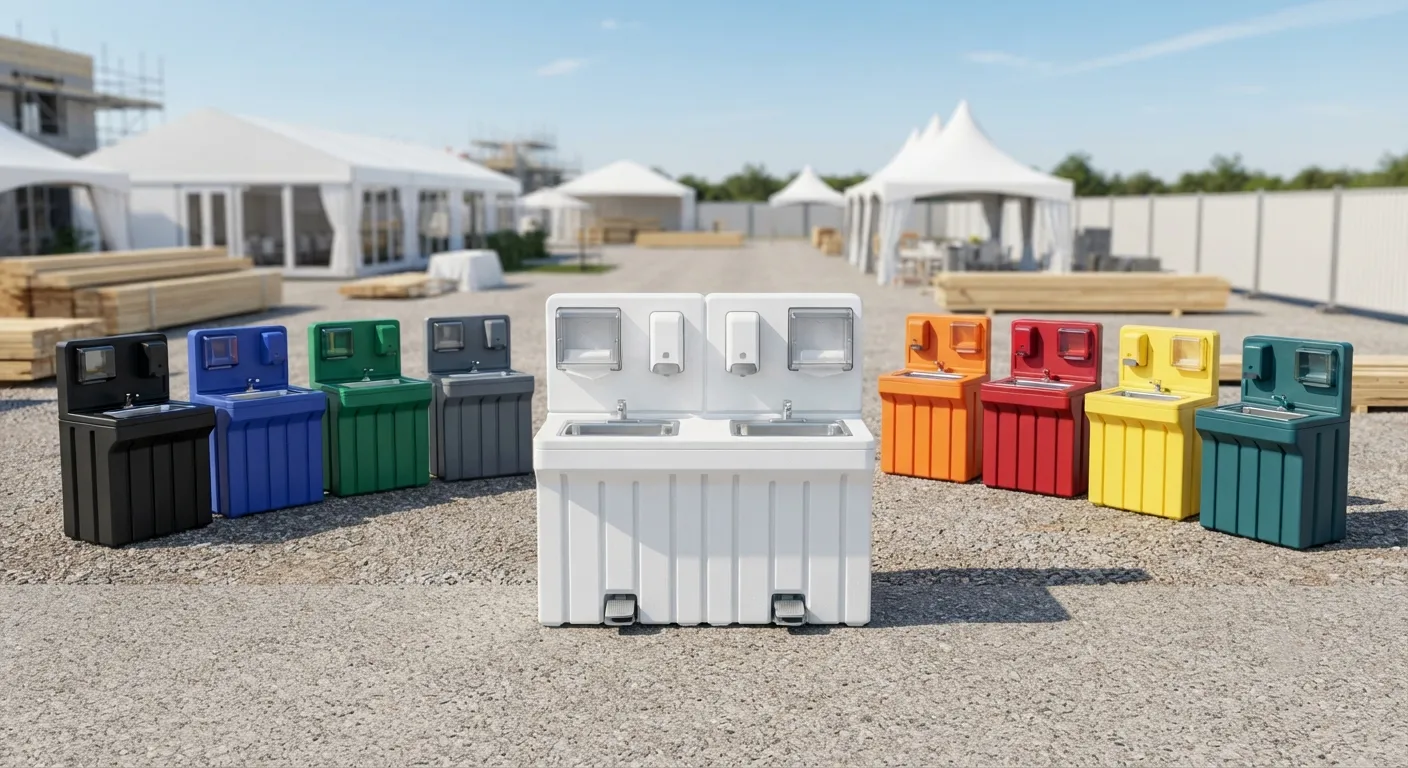
Do Camping Porta Potties Work the Same Way?
Camping and event units work on the same basic principle as a job site unit: sealed tank, chemical treatment, no plumbing. The difference is mostly footprint and turnover. A camping-style unit might see lighter, more spread-out use over a weekend rather than steady traffic from a 20-person crew, so servicing intervals can stretch further between visits. For an outdoor event or a county fair setup near Topeka, placement matters as much as unit count. ADA Standards section 213.2 requires that where single-user units are clustered, at least 5 percent, and never fewer than one, be an accessible unit, and that accessible unit needs a 60 inch turning circle inside per ADA Standards section 304.3.1. Check camping porta potty, county fair restrooms, or ADA accessible porta potty for the specifics on that setup.
What Chemicals Go in a Porta Potty?
The blue liquid in the tank is a deodorizing and waste-breakdown treatment, not a harsh industrial chemical. It's added at setup and topped off during servicing. If you're searching for portable toilet chemicals near me because you're managing your own units, most rental companies, including Topeka Porta Pros, handle chemical treatment as part of the service visit rather than selling it separately. This is different from septic tank cleaning chemicals, which treat a fixed underground tank rather than a portable unit; a residential septic tank is typically pumped every 3 to 5 years depending on tank size and household size, not chemically treated on a schedule the way a rental unit is. See septic pumping service or how often to pump a septic tank if that's actually what brought you here.
| unit | duration | typical price |
|---|---|---|
| standard | day | $150 |
| standard | week | $200 |
| deluxe | week | $250 |
| ada | week | $185 |
Pricing above reflects typical rates from measured data; full ranges and delivery fees are on porta potty rental cost and monthly porta potty rental.
Why does my porta potty smell bad between services?
Odor usually means the chemical treatment has broken down faster than expected, often from heavy use or hot weather. Servicing on schedule fixes most of it. See do porta potties smell for what's normal and what's not, and how often are porta potties cleaned for standard intervals.
How many porta potties does a construction site need?
OSHA 1926.51(c) sets the baseline: one toilet for 20 workers or fewer, then additional seats as the crew grows past that. Our OSHA portable toilet requirements page breaks down the full table by crew size.
Can I place a porta potty on a public street in Topeka?
Placement in the public right of way needs confirming with the city before delivery. Check porta potty permit requirements and porta potty placement guide before you set a location.
Does a flushable unit need a water hookup?
No. It carries its own fresh water tank and pumps water with a foot pedal, storing waste in a separate holding tank. No plumbing connection needed at all. Details are on deluxe flushable porta potty.
What's the difference between a porta potty and a restroom trailer?
A restroom trailer has multiple stalls, running water and often climate control, closer to a real bathroom than a single unit. See restroom trailer rental and 2 stall restroom trailer for options near Topeka.
Next step
Get a delivery date
Tell us the address, the dates and the headcount. We size the order and confirm the route.